NC State Fights an Emerging Strawberry Threat

A few years ago, Austin Wrenn noticed something unsettling in his strawberry greenhouses at Wrenn’s Farm in Zebulon, North Carolina. He was one of the first growers in the state to experience losses from an unexpected, aggressive fungal pathogen known as Neopestalotiopsis, or Neo-P.
“Strawberries, I always say, love to die,” Wrenn explains. “They will find any way they can to die, and our job as growers and researchers is to prevent that.”
For North Carolina’s strawberry industry, Neo-P has become one of those ways that these fruit plants can easily die.
Once a minor, opportunistic fungus, Neo-P has emerged as a significant threat.
A Global Invader
Neo-P first gained national attention in 2017 after a devastating outbreak in Florida strawberry fields. By 2022, the pathogen was confirmed in North Carolina..
The disease is difficult to manage because infected plants often appear healthy when they are transplanted from nurseries into farm fields.
The fungus can go undetected for weeks, until plants collapse.

Wrenn, president of the North American Strawberry Growers Association, views Neo-P as a threat to the high-stakes business of strawberry production: Before small family operations can even harvest the first fruit, they can easily have between $20,000 to $30,000 per acre invested in their strawberry crop.
“They’re relying on the revenue from selling their fruit to repay that investment and for their livelihood,” Wrenn explains. “When Neo-P takes off, you can lose large portions of your fields almost overnight. That is financially devastating, especially for our smaller growers.”
The Need to Adjust
Mark Hoffmann, an NC State Extension strawberry specialist and associate professor of horticultural science, has been at the heart of the university’s multidisciplinary response.
While acknowledging the severity of the pathogen, he advocates for a calm, research-based approach to Neo-P.
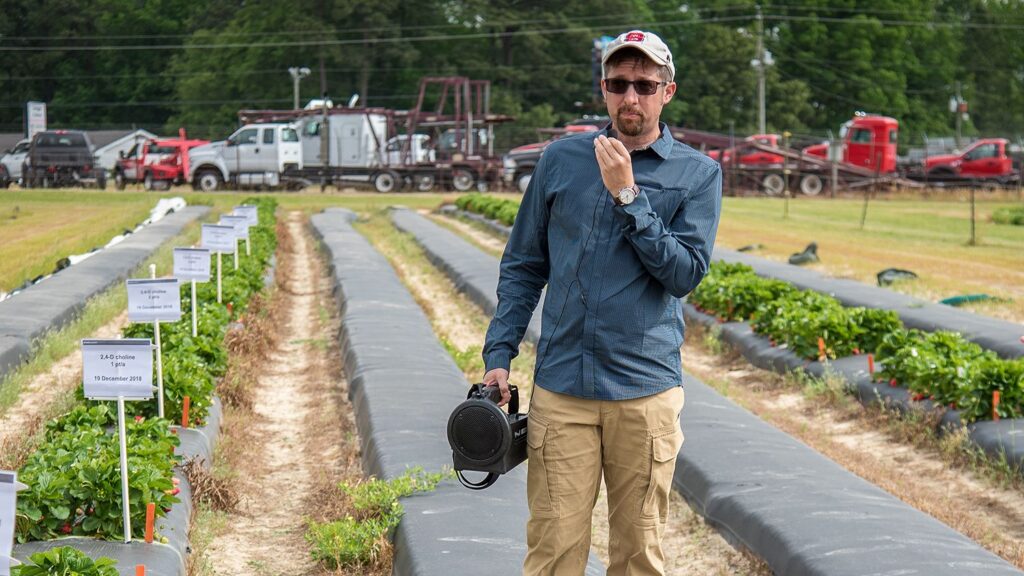
“There was a lot of rhetoric, fingerpointing and panicking when it first came to North Carolina,” says Hoffmann, an N.C. Plant Sciences Initiative faculty affiliate. “It’s a serious disease and people need to adjust. Growers, nurseries and breeding programs are all doing just that.”
Hoffmann compares the Neo-P situation to the anthracnose outbreaks of the 1990s, which were eventually managed through integrated pest management, or IPM, protocols informed by research.
“It’s a serious disease, and people need to adjust.”
“Anthracnose spread much like Neo-P has, from nursery stock to fruiting fields, where it got established,” Hoffmann says. “Anthracnose was a big problem back then because nobody knew how to deal with it. Now, it still causes damage, but it hasn’t wiped out the industry.”
Just as was the case with anthracnose, research-based management strategies are emerging for Neo-P.
“We have an IPM protocol for Neo-P, and while it’s certainly not 100% there, it helps,” Hoffmann says. “It’s a lot more work for the grower, but there’s a lot of research taking place that should yield even more options.”
“It’s a lot more work for the grower, but there’s a lot of research taking place that should yield even more options.”
Right now, small-scale growers who have off-farm jobs face the biggest challenges, because they may not have the time or equipment to keep up with intensive scouting and spraying, Hoffmann says.
“If it rains, you’re going to have to be out there, and if you have a job and can only spray on the weekends, you could miss a critical window,” he says.
Managing Neo-P could cause farmers’ labor and fungicide bills to go up in the short-term, Hoffmann adds. Still, he’s hopeful that as researchers gain a better understanding of the disease and the factors that influence disease spread and severity, fears surrounding Neo-P and its threats will subside.
The Need for Research on Multiple Fronts
Three NC State researchers recently outlined what they see as key areas for future Neo-P research.
In a major review article published in January in Frontiers in Plant Science, NC State researchers Susmita Gaire, Frank Louws and Tika Adhikari, along with South African plant scientist Norman Muzhinji, urge an integrated, research-informed management approach, from the propagation of pathogen-free plants in nurseries to improved sanitation and crop rotation in farm fields.
Gaire, Adhikari and Louws are with the Department of Entomology and Plant Pathology.
“Advances in molecular diagnostic tools have improved early detection and monitoring of Neopestalotiopsis spp. Furthermore, initial efforts have begun to identify sources of genetic resistance in strawberry, thereby supporting future breeding programs,” the authors note.

Still, the researchers call for additional research to fill in what they call “considerable gaps” about the host’s defense mechanisms, the pathogen’s infection strategies and ecology and the dynamics of host-pathogen interactions.
“Addressing these challenges is crucial to developing sustainable, integrated disease management strategies and advancing resistance breeding,” they add. “Collaborative research will be imperative to ensuring productive and disease-resilient strawberry cultivation in light of this emerging pathogen.”
Adhikari, Gaire and Louws are already taking steps to fill those gaps, with a new paper that offers insights into the diversity of Neo-P and how Neo-P interacts with hosts. The work should prove useful for cultivar selection, breeding programs, and disease management strategies to help address this emerging pathogen.
Toward an AI-Enabled Early Warning System
The review article’s authors are among many researchers at NC State who are working to fill in the gaps, approaching Neo-P on several fronts.
For example, Orlando Arguello-Miranda of the Department of Plant and Microbial Biology, is working with Adhikari and Gaire to find better, faster ways to detect and diagnose the disease.

As Arguello-Miranda, an N.C. PSI faculty affiliate, explains, methods like observing symptoms on plants, even with microscopes require technical skill and are slow.
Faster approaches based on chemical tests can detect the pathogen’s DNA but can’t quantify low infection levels or tell if the pathogen.
In most cases, samples for chemical tests are destroyed to extract proteins or DNA, preventing researchers from directly observing the pathogen’s behavior and growth patterns.
“Our system allows research to see the pathogen itself and how it behaves, and we can discern which strategies Neo-P uses to grow and infect plants so fast.”
To get around these limitations, the team is using a novel artificial intelligence-powered live-cell microscopy approach to directly observe how Neo-P grows, how its spores germinate and how much variation there is among different species and isolates.
“All these questions are important for understanding emerging pathogens, but they’ve been hard to answer with existing technology,” he says. “Our system allows research to see the pathogen itself and how it behaves, and we can discern which strategies Neo-P uses to grow and infect plants so fast.”
Their system is a customized adaptation of AI image processing models originally developed for neurobiology with microchambers, also known as microfluidic chips, designed by the Miranda Lab to trap fungal spores, identify them by shape and observe fungal and spore growth.
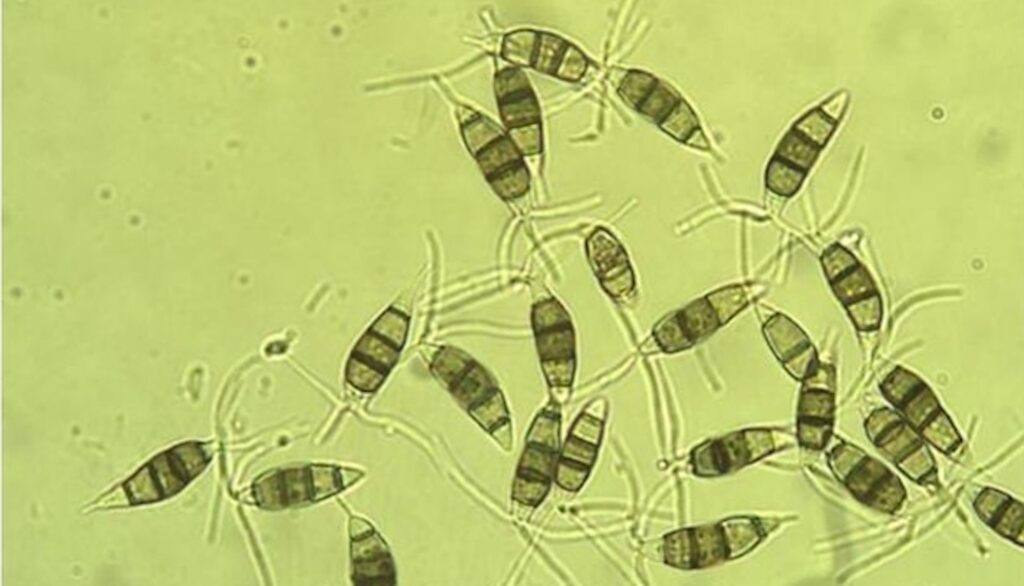

Arguello-Miranda has developed an algorithm that tracks the tips of fungal filaments, rather than the whole organism, allowing AI to identify the fungus and measure its growth even in samples contaminated with plant debris or soil matter.
“Crucially, the system also can detect the pathogen even when there aren’t many spores, which can be difficult for traditional chemical tests,” he says.
“This technology provides a rapid, non-destructive and highly sensitive alternative to lab-based diagnostics,” he adds. “The AI algorithm can quantify complex fungal structures in milliseconds, a task that would take a trained technician up to 20 minutes per image.”
In the end, the researchers want their tool to be affordable for producers of both strawberry transplants and fruits. By simply connecting a portable microscope to a smartphone, for instance, a user at a strawberry nursery could receive an immediate message whenever the detection microchambers show a high probability of Neo-P infection. That would allow operators to target fungicide applications or cull infected material, preventing devastating field-level collapses.
As the researchers await word on a large grant proposal to continue their work, the team is finalizing a paper about the AI-powered fungal tracking algorithm.
The Need for the ‘Right Answers’

Research Associate Caleb Bollenbacher, who is stationed at the Horticultural Crops Research Station at Castle Hayne, sees the research taking place across the university as vitally important for North Carolina strawberry production.
“There’s a level of pressure involved in this research …. A lot of people’s livelihoods could be at stake.”
“Once Neo-P is around, unfortunately you can’t get rid of it. We want to do as much as we can on the research front to help growers do everything they can to prevent losses,” says Bollenbacher, an NC State alumnus with the Department of Entomology and Plant Pathology.
“Part of the reason I wanted to get into plant pathology was to help people. Helping people who are working at the forefront of figuring out how to solve such a significant problem is rewarding,” he says. “There’s a level of pressure involved in this research, too: I want to make sure I’m finding the right answers. A lot of people’s livelihoods could be at stake.”

Austin Wrenn, the Zebulon farmer, is grateful for the expert advice NC State scientists have been providing him on Neo-P. He’s put their recommendations to work on his farm and in his other job managing strawberry operations at Fresh Pik Produce in Kenly, and he frequently hosts on-farm trials to test new varieties and management techniques.
“While chemical pest control is an important tool, simply spraying our way out of it is not going to work … [W]e need additional research and funding.”
“The only way we’re going to get ourselves past this challenge is to breed new resistant cultivars and to research and implement additional best practices in our nurseries and on farms,” Wrenn says.
“While chemical pest control is an important tool, simply spraying our way out of it is not going to work, it will take a multipronged approach,” he says. “As an industry, we need additional research and funding to combat this pathogen across the entire supply chain.”

Learn About Related Research
Here are a few other ways NC State researchers are working every angle to help growers tackle Neo-P:
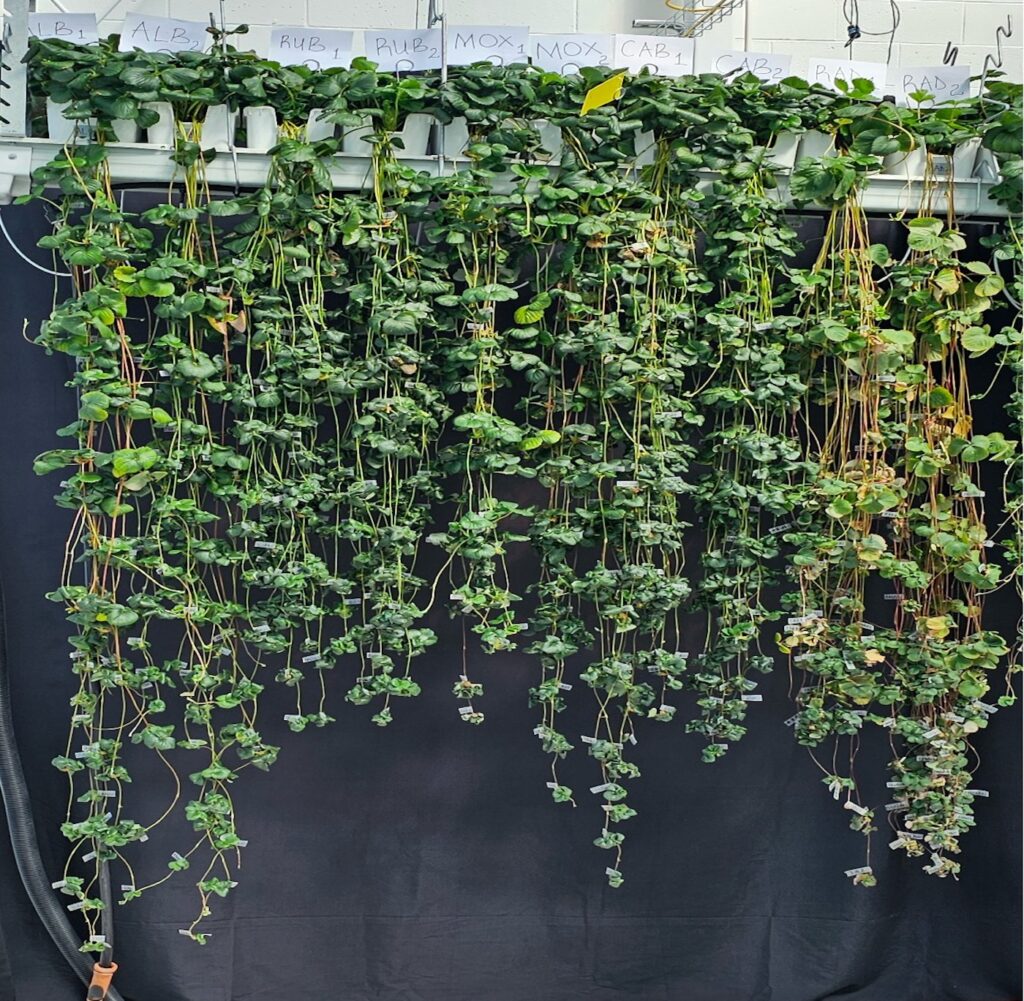
- Thanks to a $5.3 million U.S. Department of Agriculture Specialty Crops Research Initiative grant, Hoffmann has led a research team that spent five years digging into new ways of producing disease-free plants in indoor environments, and he’s now wrapping up two years’ worth of trials at the Horticultural Crops Research Station at Castle Hayne to identify varieties that show Neo-P resistance.
Finding Varieties That Stand Up to Neo-P
When Neo-P emerged as a significant threat to North Carolina’s strawberry crop in the early 2020s, no one knew if there were commercially available cultivars resistant to the disease.
“Right now, there’s no silver bullet for Neo-P, so growers need cultivars that are resistant. There is an integrated pest management protocol, but even so, Neo-P isn’t easy to control. None of the chemicals that we are using now has 100% efficiency,” says Mark Hoffmann.
Over two growing seasons, 2024-25 and 2025-26, NC State researchers grew 15 varieties total in a disease-free environment at the NC State’s Plant Sciences Building, then transferred them to the research Station in Castle Hayne, where they were inoculated with the pathogen. The goal was to see which strawberry varieties are best when it comes to resisting Neo-P.

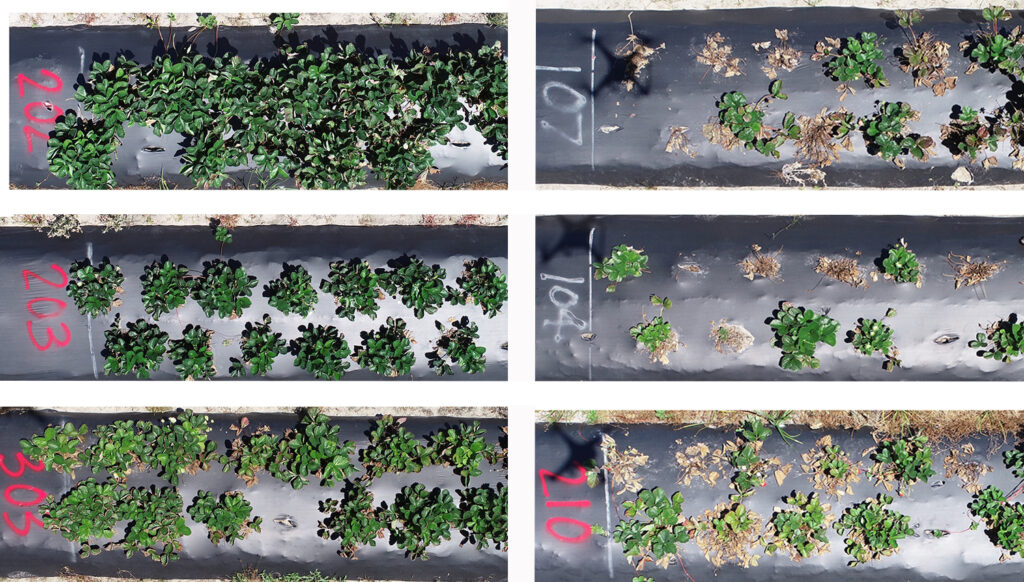
The research, which wraps up soon, will provide insights for future disease-resistant breeding efforts while allowing growers to reduce their reliance on fungicides.
The Team
Along with Hoffmann, researchers for this ongoing project include:
- Kim Heagy, research associate, Department of Horticultural Science
- Tika Adhikari, principal research scholar and adjunct assistant professor, Department of Entomology and Plant Pathology
- Caleb Bollenbacher, research associate, Department of Entomology and Plant Pathology
Funding
N.C. Strawberry Association
N.C. Department of Agriculture and Consumer Services
Learn More
Preliminary Evaluation of NC Strawberry Cultivars for Susceptibility to Neopestalotiopsis Leaf and Fruit Rot (NC State Extension)
- Plant pathologist Daisy Ahumada is evaluating different disease management regimes involving fungicides and biological products to come up with effective, affordable protocols for disease management.
Searching for Disease Management Options
Neo-P’s confirmed arrival in North Carolina in 2022 was followed by the phasing out of Thiram, one of the most effective fungicides in growers’ arsenal, along with supply chain issues that made other chemical standbys hard to access. Growers, reporting average losses of 12%, or $13,000 per farm in a year’s time to the disease, were eager for solutions.
In 2025, Ahumada began testing nine treatment alternatives, including both biological products and chemical fungicides with different modes of action, during specific windows — such as when the products must also control against Botrytis and Anthracnose, two other significant plant pathogens affecting North Carolina strawberries.
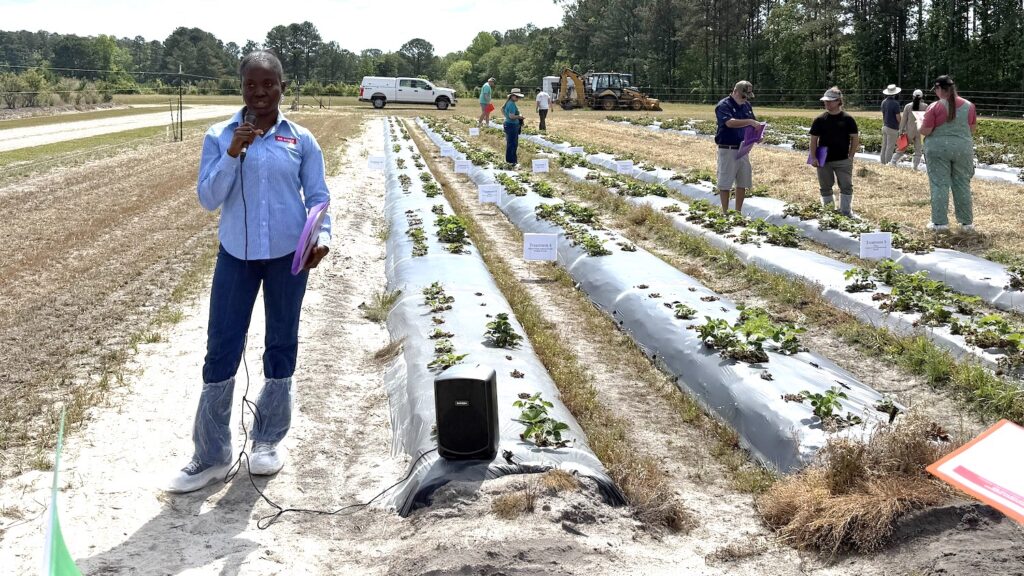
Preliminary analysis of the first year’s data has yielded an idea of which spray programs work best, and Ahumada says she’ll have more confidence in making final recommendations once the 2026-27 season wraps up.
“The data that we have so far is very promising, showing yield differences with some of the spray programs,” says Ahumada, an assistant professor and Extension pathology specialist in the Department of Entomology and Plant Pathology.
Funding
N.C. Tobacco Trust Fund Commission
N.C. Strawberry Association
Learn More
Fungicide Program Considerations for Spring Disease Management in Strawberries (NC State Extension)
- Ahumada is also embarking on a new study to pinpoint when and where infection occurs, whether it’s in nurseries or rooting facilities or in farm fields.
Finding the Disease Early — and Stopping It Before It Spreads
One of the biggest challenges posed by Neo-P is that infected nursery transplants appear perfectly healthy when they arrive at farms, with signs of the disease often not becoming visible until it’s too late for farmers to prevent losses.
Researchers from NC State and the University of Florida are set to embark this summer on new research aimed at pinpointing when and where infection occurs, so that it can be stopped before it has a chance to spread.
The team plans to source 800 strawberry plants from five different nurseries in Canada and North Carolina. Molecular primers will be used to screen for aggressive strains of the fungus across different types of plant tissue where the pathogen might be hiding: the crowns, or the central stems from which all other parts of the plants grow; the tips, the youngest parts of the plants’ runners that extend out from the crown; and the roots.
The researchers will track the plants across the entire supply chain — from the nursery where mother plants are raised, to the facilities where the tips from the mother plants are rooted and to the fields where the daughter plants are transplanted and bear fruit.
“The project is laying down the scientific foundation for future certification programs,” says Ahumada.
The Team
In addition to Ahumada, the team includes:
- Mark Hoffmann, of the Department of Horticultural Science
- Mallory Choudoir, assistant professor and Extension specialist in the Department of Plant and Microbial Biology and N.C. PSI faculty affiliate
- Natalia Peres, professor of plant pathology with the University of Florida’s Gulf Coast Research and Education Center.
Funding
U.S. Department of Agriculture Animal and Plant Health Inspection Service
- Entomologist Lorena Lopez is leading an interdisciplinary project to investigate whether two common strawberry pests could be linked to either spreading the disease or making plants more vulnerable to infection.
Could Mites and Beetles Play a Part in Spreading Neo-P?
While Neo-P is known to spread primarily through rain splash and sometimes by wind, some researchers think spider mites and sap beetles might play a part, as well.
Two-spotted spider mites are major pests in strawberries, and some have observed that Neo-P-infested plants might host higher mite populations than plants that don’t have the disease.

Meanwhile, sap beetles, common in pick-your-own fields that have leftover fruit as the season gets later, might play a role in carrying the sticky spores of Neo-P around fields or in creating wounds in plants that could serve as entry points for infection.

Four researchers from the Department of Entomology and Plant Pathology have lab- and field-based studies intended to determine if there is indeed a link between these pests and Neo-P. The researchers are now processing samples and counting insect and mite populations from a field trial at the Castle Hayne research station, and if they find significant patterns, they hope to repeat the trial next season.

“My goal is to see if we can modify pest management to indirectly mitigate the disease as well. Can we create these disease and pest programs together as part of an integrated pest management strategy?,” says Lorena Lopez, an assistant professor, NC State Extension specialist and N.C. PSI faculty affiliate. “It will change the way growers think if there’s something else, other than Neo-P alone, contributing to disease infection.”
The Team
In addition to Lopez, the team includes:
- Caleb Bollenbacher, a research associate in plant pathology at research station in Castle Hayne
- Gareth Powell, an assistant professor and director of NC State’s Insect Museum
- Michael Bradshaw, an assistant professor and N.C. PSI faculty affiliate
Funding
N.C. Strawberry Association
- Adhikari, Gaire and Louws are the first to create a genetic blueprint of 50 Neopestalotiopsis strains from across North Carolina, both highly virulent ones and ones that pose less significant threats, and identified mutations associated with resistance to major fungicide classes.
Delivering DNA Insights
NC State researchers have completed the first comprehensive genomic assessment of Neo-P, uncovering insights into how the fungus evolves resistance to common fungicides and suppresses strawberry immune systems.
This foundational study, published in May, provides crucial data to help scientists and growers develop new resistant strawberry varieties and improve long-term disease management strategies.

“Our study revealed substantial genomic diversity among Neo-P isolates, and we were able to identify enzymes and effectors involved in host colonization and mutations linked to resistance to different fungicides. The findings provide a foundation for developing improved, sustainable disease control strategies,” says Tika Adhikari.
The Team
In addition to Adhikari, the lead study author, principal research scholar and adjunct assistant professor, the NC State research team included:
- Frank Louws, professor of plant pathology and N.C. Plant Sciences Initiative faculty affiliate
- Susmita Gaire, research technician
- Prem Magar, graduate teaching and research assistant
- Anju Pandey, research technician
- Norman Muzhinji, a plant scientist with the University of the Free State, South Africa, also contributed to the research.
Funding
N.C. Department of Agriculture and Consumer Services
N.C. Strawberry Association
Southern Region Small Fruit Consortium
Learn More
Genome-Wide Analysis of the Invasive Fungal Pathogen Neopestalotiopsis Reveals High Genetic Diversity, Effector Repertoires, and the Assessment of Fungicide Assessment Risks (PLOS One)
The Invasive Fungal Pathogen Neopestalotiopsis in North Carolina: Molecular Characterization, Virulence, and Host Susceptibility (Phytopathology)
- Horticultural scientist Jing Zhang is developing smart tools that will use drone-collected images to develop field-deployable, AI-enabled apps to provide large-scale growers an easy way to get early warning of potential disease problems in their fields.
Developing Smart Tools to Detect Strawberry Disease Earlier

Traditional scouting for strawberry diseases such as Neo-P is a slow, manual process that requires workers to crawl through rows and pull back dense canopies to find symptoms like leaf spots or crown rot. This makes it hard, especially for large-scale producers, to identify infected areas before the disease becomes widespread.
An NC State team is developing tools to help growers monitor crop health by drone and act early, before losses occur.
The project focuses on building artificial intelligence-powered models that can spot evidence of disease symptoms using drone-collected images with drones and considering ways to adapt similar AI-driven technology for those who produce strawberry transplants in indoor nurseries.
The Team
Jing Zhang, an assistant professor in the Department of Horticultural Science and N.C. Plant Sciences Initiative faculty affiliate, leads the project. Zhang is training AI models using drone-collected images from breeding trials by Gina Fernandez, of the Department of Horticultural Science, and disease resistance trials by Mark Hoffmann, both .
Zhang also is working with three Cooperative Extension agents — Aaron Moore of Union County, Matthew Clay of Wilkes County and Joanna Eades Radford of Surry County — to gather smartphone images and beta-test the tool to ensure it’s field-ready. The agents are part of the N.C. PSI Extension Agent Network.
Funding
N.C. Strawberry Association
This post was originally published in College of Agriculture and Life Sciences News.