Step 1: Determining if IRB Approval is Required
Do I Need IRB Approval?
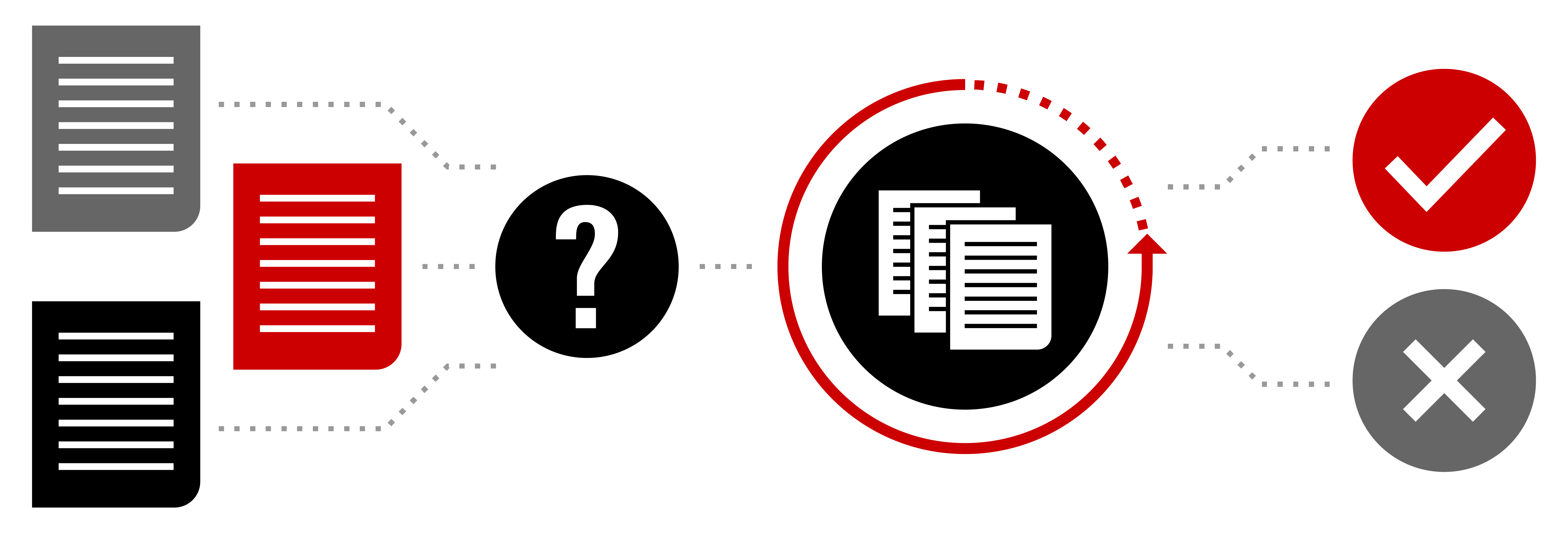
The NC State IRB office asks three sequential questions to determine if IRB approval is necessary for a project and from where the IRB approval should be sought. If the answer is “yes” to the first question, we then proceed to the next question, and so on. If the answer to one of the first two questions is “no,” then the study does not need IRB approval.If the answer to question number three is “no,” the project does not require IRB approval through NC State University but may require it elsewhere. If a researcher needs an official determination regarding if IRB approval is required or not required, please contact IRB-Director@ncsu.edu.
Is It Research?
Research is defined as a systematic investigation designed to develop or contribute to generalizable knowledge. At NC State, regulated research is supervised by two distinct bodies. The IRB office oversees research involving living humans, whereas IACUC oversees research involving non-human vertebrate animals.
Evaluation, assessment, and quality improvement activities can be systematic but they generally do not aim to create generalizable knowledge. These activities only cross over into regulated research if the work will be used for any other purpose (thus contributing to generalizable knowledge) OR the work involves humans and an FDA “test article” (e.g., an AI tool, medical device, software application, wearable, biologic, drug) under 21 CFR regardless of whether the work is systematic or the intent is to generalize.
To meet the definition of research, your project must involve both a systematic investigation and an intent to generate or contribute to generalizable knowledge unless the FDA exception above applies.
- If the answer to the question “Is It Research?” is “no,” then IRB approval is not required. Please review the pilot study and feasibility work IRB unit standard as the definition of research is nuanced.
- If the answer to this question is “yes,” then IRB approval may be required. Your next step is to answer “Is it Human Subjects Research?”
Is It Human Subjects Research?
A human subject is a living individual “about whom” a researcher collects or analyzes data.
Your project involves human subjects if you, as a researcher, do any of the following:
- Interact with participants
- Provide an intervention to participants
- Manipulate the participant’s environment in some way
- Obtain, use, study, analyze, or generate identifiable private information or identifiable biospecimens (even if there’s no direct interaction with participants). Identifiable private information is data collected in a context where an individual can reasonably expect privacy (e.g., private/locked social media group, student grades, medical records) and which contain details that can be linked directly or indirectly back to them (e.g., names, Unity IDs, specific demographic combinations).
If your project meets both definitions – it is research and human subjects research – you must submit an IRB application. Approval can never be retroactive, so you must receive it before recruiting participants, collecting/scraping data, or accessing identifiable private records or biospecimens.
For more nuanced details, please review our guidance “Is is human subjects research? The definition of a human subject.”
Is IRB Approval Through NC State University Needed?
Whether you can get IRB approval through NC State University for a project that is “research” and “human subjects research” depends on your affiliation and the nature of your project.
For NC State Affiliates (Students, Staff, Faculty)
You are considered an agent of the institution if you are currently at NC State University as a student, faculty, or staff member. If the project meets the definition of research, human subjects research, and the research will be within the scope of your role at NC State University, you should submit to the NC State University IRB for protocol approval unless the research falls into one of the special circumstances below and you’ve consulted with the NC State IRB office to confirm that the office cannot serve as the IRB of Record for your project.
Special Circumstances
- Cooperative Research: If you will be collaborating with other institutions, please review the Cooperative Research webpage.
- Select Biomedical Studies: If your study involves “more than minimal risk,” you may qualify to use a private IRB. Review the WCG IRB unit standard.
- Outside Research/Start-Ups: If you are conducting research entirely for an outside entity (e.g., independent start-ups or External Professional Activities for Pay) with zero NC State involvement, the NC State University IRB likely cannot review your project. Contact the Office of Research Commercialization instead.
For External Researchers
If you are not affiliated with NC State University, you do not need NC State University IRB approval unless an NC State person is on your research team. However, to target NC State populations for research purposes, you must secure the following permissions:
- Gatekeeper Permission: You must get approval from the appropriate department head, dean, or director before targeting their populations.
- Surveys: You must register your survey with University Data and Analytics (UDA) in accordance with the NC State University survey regulation.
- In-Person Recruitment: You must comply with the Use of University Space regulation. Review the Student Centers Events for Non-University Groups guidance and contact StudentCentersEvents@ncsu.edu to secure space reservations and permits.
Types of IRB Review and Approval
The IRB office assigns the appropriate review level for your project to ensure it balances risks and benefits and protects participants per 45 CFR 46.111. Because the review level depends on complex, shifting regulations, researchers cannot request a specific review level that is lower than what the IRB determines is necessary. While the IRB determines the minimum required review, funders, sponsors, or data providers may demand a stricter level of review. The NC State IRB will facilitate this higher level of review if requested.
Review Levels and Determinations
IRB Review Levels
- Administrative Review Leading to an Exemption Determination (includes exempt with a limited review and FLEX exemptions): For minimal risk research that qualifies for exemption from broader federal regulations in specific categories, such as:
- Educational research that can be considered “normal educational practices” in “accepted educational settings” that do not adversely affect student learning processes or educator assessment
- Surveys, interviews and focus groups with adults
- Observations of public behavior
- Benign behavioral interventions with adults
- HIPAA limited data sets
- Taste tests with wholesome food without additives or food composed of ingredients that are generally recognized as safe (GRAS)
- Expedited Review: For specific categories of minimal risk research such as:
- Clinical investigations of an FDA approved drug or medical device used on label
- Blood draws
- Biospecimens (human hair/nail clippings, saliva, urine, stool, skin sample)
- Data collected non-invasively (e.g. tape measure, weight scale, Apple Watch/Fitbit)
- Accessing/scraping secondary data (information or biospecimens)
- Surveys, interviews, focus groups, benign behavioral interventions that are not eligible for exemption but still minimal risk
- Convened Full Board Review: For more than minimal risk research and minimal risk research that is ineligible for review at a lower review level.
Special Determinations
- Not Human Subjects Research (NHSR): If your project does not meet the federal definition of human subjects research, you can request an official NHSR determination. These projects do not receive an IRB approval level.
- Preliminary Determinations (.118 or Just-in-Time): If you are securing federal funding (NSF or NIH) but have no immediate plans to conduct the human subjects portion of the research, you can request a preliminary determination. You will need to submit a protocol amendment later to get actual IRB approval.
IRB Review Processes
Research studies vary in complexity and risk, which dictates the level of IRB review required under 45 CFR 46.111. The IRB focuses on balancing risks and benefits, ensuring transparent communication with participants, and verifying sound research design that does not expose participants to unnecessary risk.
Administrative Review Leading to an Exemption Determination
Though not all IRBs review and approve studies that can be exempted from the broader federal regulations in 45 CFR 46, NC State University’s human subject regulation (REG 10.10.03) requires that the IRB office make the exemption determination instead of the researcher.
IRB staff handle the pre-review, final review, and approval of all studies that qualify for an exemption determination.
Some exempt studies are required to undergo a limited IRB review. Limited IRB review considers a study’s data management plan and, where appropriate, broad consent when determining if the study can be approved. Limited review occurs concurrently with IRB review and approval.
Minimal risk studies that would normally require expedited review can sometimes be reviewed at the exempt level if the study qualifies for a FLEX exemption per the NC State University IRB unit standard on exemption requests. Studies that do not qualify for a FLEX exemption include, but are not limited to, those that are:
- More than minimal risk research
- Funded research
- Cooperative research
- Clinical trials studying a health-related outcome (biological or behavioral)
- Using or testing of a drug, biologic, medical device
- Using invasive research procedures
- Introducing energy into the human body (e.g., x-rays, etc.)
- Collecting biospecimens (e.g., blood draws, etc.)
- Subject to additional oversight from any U.S. federal agency (e.g., Food and Drug Administration, Department of Defense, etc.)
- Other studies as appropriate
Expedited Review and Approval
Expedited studies are minimal risk and fit into one of the federally defined categories eligible for expedited review. They are subject to all regulations of 45 CFR 46.111 and 45 CFR 46.116.
An IRB office staff member conducts an expedited protocol’s pre-review but the final review and approval is done by an IRB full board member with appropriate expertise in the research methods and population(s) targeted.
Please note: Expedited is simply the regulatory name of “mid-level” IRB review; it does not mean the review is rushed. .
Convened Full Board Review and Approval
For studies that are more than minimal risk, or minimal risk studies that do not fit into expedited categories, an IRB office staff member pre-reviews the protocol before sending it for final review and approval by the convened full board.
The full board meets once a month (usually the first Tuesday). Additional review layers may be required depending on the study’s complexity, sponsorship, or international elements. Studies reviewed at the convened full board level must have all informed consent requirements of 45 CFR 46.116 (unless appropriately waived) and meet the criteria for approval at 45 CFR 46.111.
Occasionally, a convened full board study will warrant additional layers of review. This can be due to the research design; the annual review requirements for an individual study; additional obligations from applicable regulations; sponsor requirements; special populations considerations; or in some cases, the study conducting international research.
Not Human Subjects Research Determination
If your project does not meet the federal definitions of “research” and “human subjects research,” the IRB does not have jurisdiction. In these cases, complete the NHSR Request Form. IRB staff will respond in several business days to follow-up. You can then request an official NHSR letter if needed.
Please note: An NHSR determination is different from exemption determination. Studies that receive an exemption determination are considered human subjects research but meet certain criteria that allow for flexibility of review. A “Not Human Subjects Research”(NHSR) determination means that the project is not considered human subjects research at all.
Just-In-Time Approval for NIH Funded Studies
Some research sponsors require IRB approval or pending approval before accepting new grant proposals. Because these protocols are not yet fully developed, the IRB offers preliminary determinations. Grant proposals applying for NIH funding can seek a type of preliminary determination called the “Just-In-Time Approval” or “JIT.” Please refer to the guidance “NIH Grants and the IRB” for Just-In-Time guidance for NIH grants.
Applying for Just-In-Time Approval (NIH studies only)
To seek Just-In-Time approval, researchers must complete the following steps:
- Open a new IRB application in the eIRB system.
- On the Title tab, write “[Just-In-Time Request]:” in the protocol’s title box along with the protocol title which should match your grant title.
- List the funding source as “NIH” for Just-In-Time approval.
- List the faculty point of contact for the protocol. This should be someone at NC State who is also listed on the grant application.
- For Just-In-Time approval, all designed procedures, or as many designed procedures as are presently available, should be provided and the IRB application should be completed to the best of the researcher’s ability, including the upload of all supporting documentation materials.
- Click the “Save” button above the narrative boxes you entered text into.
- Navigate to the Routing and Status tab of the eIRB application and click the “Submit to IRB office” button. The IRB office cannot process a Just-In-Time approval without a submitted protocol.
- Complete the letter request form on the NC State IRB website for a Just-In-Time approval letter. No requests submitted over email can be honored.
Please note, that a Just-In-Time approval is staged research; you should first familiarize yourself with the NC State IRB guidance on phased and staged research protocols before requesting Just-In-Time approval.
.118 Determinations for NSF Funded Studies
Some research sponsors require IRB approval or pending approval before accepting new grant proposals. Because these protocols are not yet fully developed, the IRB offers preliminary determinations. For NSF studies, the NC State IRB can provide researchers with a “.118 Determination Letter.” A .118 determination letter states that a study will involve research with human subjects but the protocol cannot be fully developed yet and lacks immediate plans for the involvement of human subjects. Researchers do not need a complete a full IRB application to receive a .118 determination letter.
.118 determination letters are valid for a period of 1 year. Within that year, researchers are expected to file a protocol amendment with the IRB office detailing their proposed research design in order to receive IRB approval to conduct human subjects research.
Applying for a .118 Determination (NSF studies only)
Researchers do not need to have a fully complete IRB application to be granted a .118 determination or Just-In-Time request; they do, however, need to complete the following steps:
- Open a new IRB application in the eIRB system.
- On the Title tab, write “[.118 Determination Request]:” in the protocol’s title box along with the protocol title which should match your grant title.
- List the funding source as “NSF” for .118 determinations.
- List the faculty point of contact for the protocol. This should be someone at NC State who is also listed on the grant application.
- Go to the Description tab of the eIRB application. State in the first narrative box that “All procedures and supplemental documents will be submitted for IRB review and approval before it is implemented. No study procedures including recruitment, consent, data collection, or data analysis will occur until after the PI has complete and full IRB approval via an amendment process.”
- Click the “Save” button above the narrative box you just pasted text into.
- Leave the rest of the application blank. Navigate to the Routing and Status tab of the eIRB application and click the “Submit to IRB office” button. Aside from the information mentioned above that you must include in the Title and Description tabs, the rest of an IRB application for a .118 determination should be blank. The IRB office cannot process a .118 determination request without a submitted protocol.
- Complete the letter request form on the NC State IRB website for a .118 determination letter. No requests submitted over email can be honored.
Please note, that a .118 determination is staged research; you should first familiarize yourself with the NC State IRB guidance on phased and staged research protocols before requesting a .118 determination.
IRB Lifecycle
View full lifecycle